
Cardboard Co
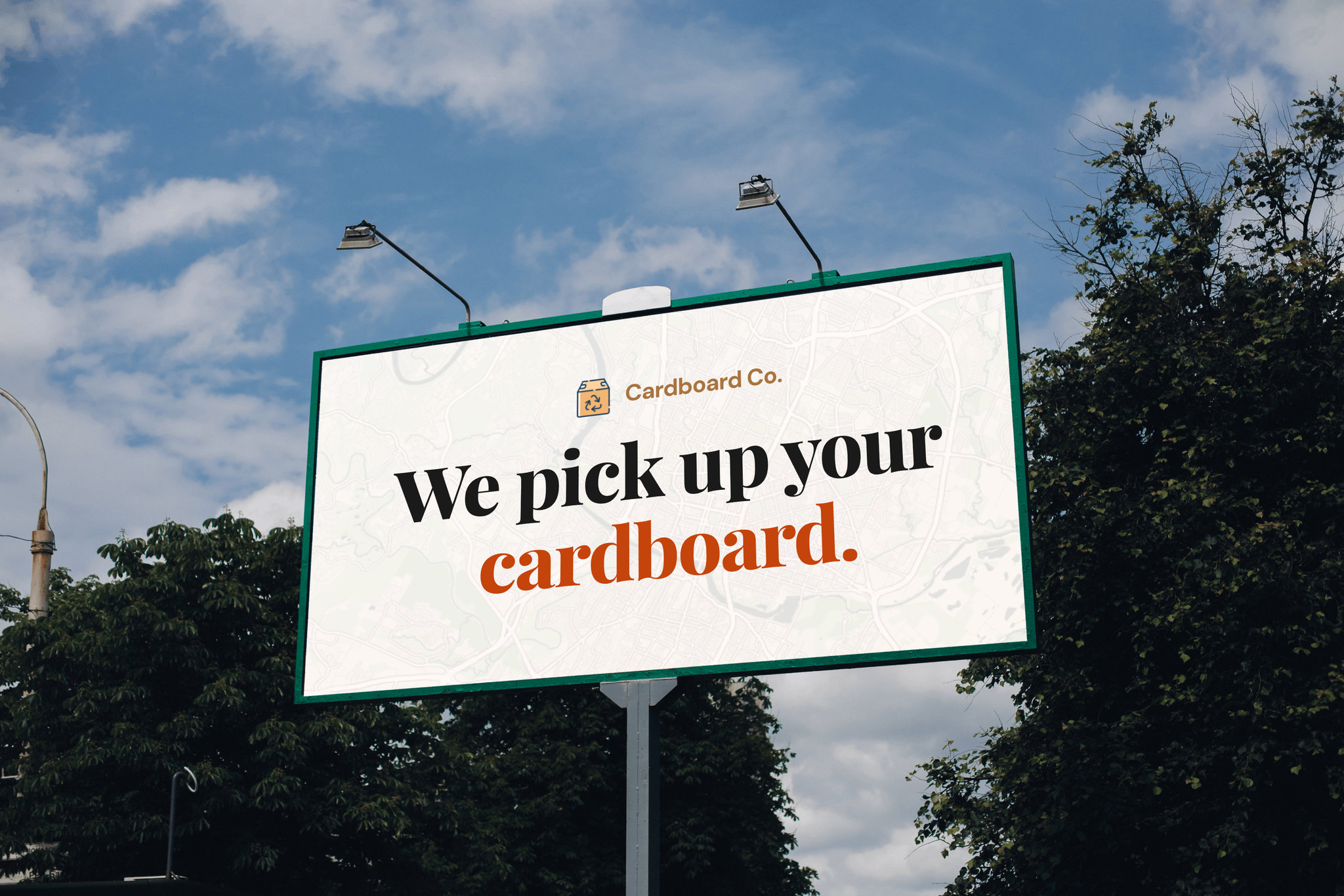
PilotAn exercise in building an idea, a brand, and testing product-market fit. Cardboard Co is a hyperlocal recycling pickup service in Austin, TX, currently running as a pilot in three neighborhoods.
February 2026
The Hypothesis
Austin's curbside recycling is inconsistent. Pickup days are limited, bins overflow, and large boxes don't fit. Meanwhile, online shopping keeps growing. More deliveries, more cardboard, more frustration.
The hypothesis: people would pay a small fee for scheduled, hassle-free cardboard pickup that actually gets recycled. Not a full-service junk removal company. Just cardboard, done right.
Building the Brand
The goal was to create something that felt trustworthy and approachable. A neighborhood service, not a faceless company. The name needed to be simple and memorable. “Cardboard Co” says exactly what it is.
The visual identity leans into warmth and locality: friendly copy, clear pricing, and an emphasis on “100% goes to local recycling facilities.” No greenwashing, no corporate jargon. Just a straightforward service.
The MVP
The pilot launched with the minimum needed to test demand:
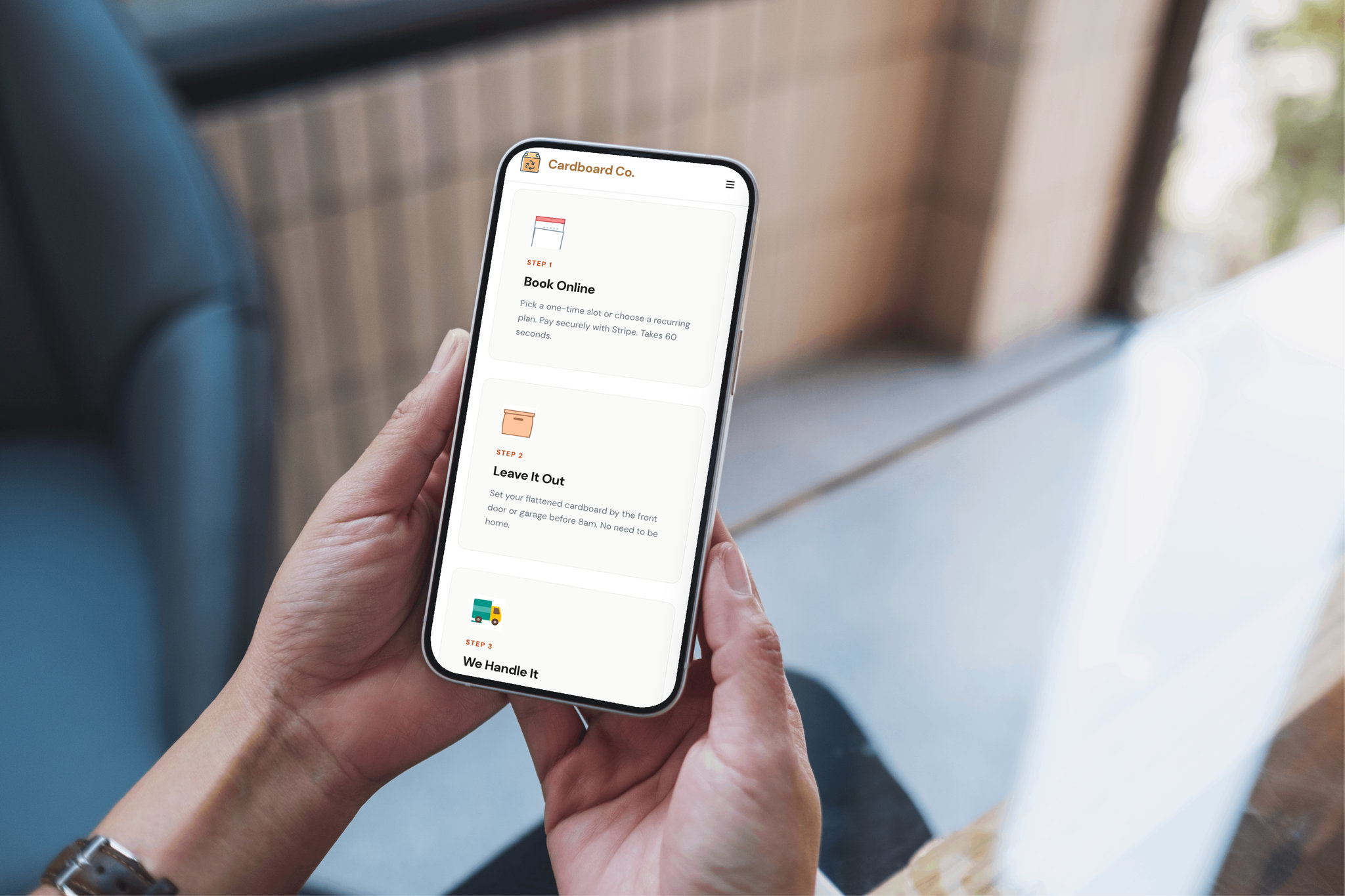
- A landing page built with Next.js, explaining the service and pricing
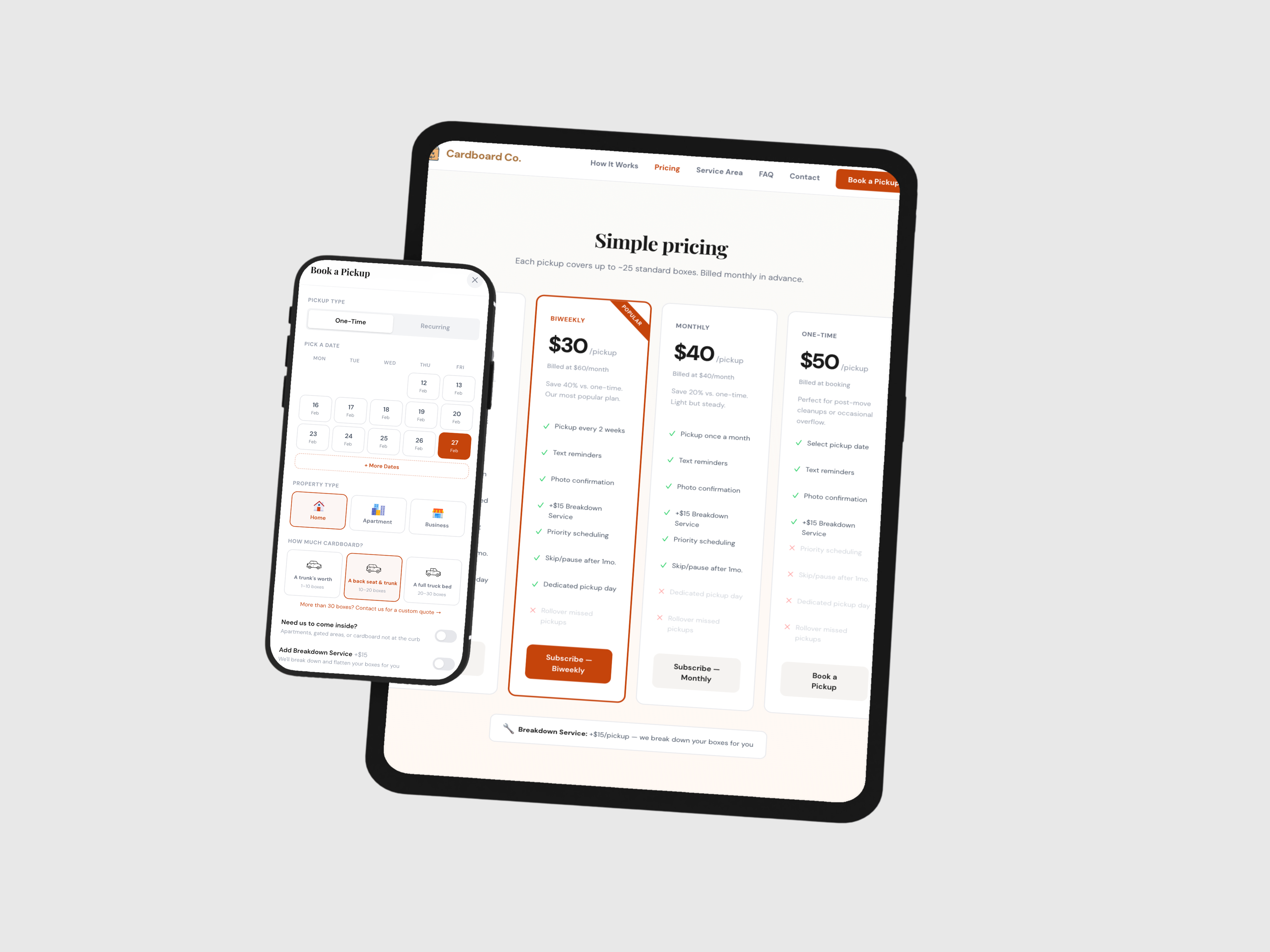
- Stripe subscriptions for recurring billing (weekly, biweekly, monthly tiers)
- Custom booking forms for scheduling pickups and managing customer preferences
- Text and email reminders so customers get a heads-up before each pickup
- A truck (the unglamorous but essential part)
Testing Product-Market Fit
The pilot is intentionally constrained to three neighborhoods: Mueller, Windsor Park, and Cherrywood. This keeps routes efficient and creates density, which is essential for a pickup service to be viable.
Pricing tiers test willingness to pay at different frequencies. One-time pickups ($50) attract the curious; subscriptions ($25-40) reveal who finds ongoing value. The “breakdown service” add-on tests whether convenience commands a premium.
Key questions the pilot aims to answer:
- • Do people actually have this problem?
- • Will they pay to solve it?
- • What frequency makes sense for most households?
- • Can the unit economics work at neighborhood scale?
Tech Stack
What I'm Learning
- ✓Hyperlocal services need density to work, and three neighborhoods is the right starting constraint
- ✓Simple beats sophisticated when validating an idea; start with the minimum tooling needed to test demand
- ✓Brand trust matters more for services that come to your home. Friendly copy and clear pricing go a long way
- ✓The best way to test product-market fit is to charge money from day one